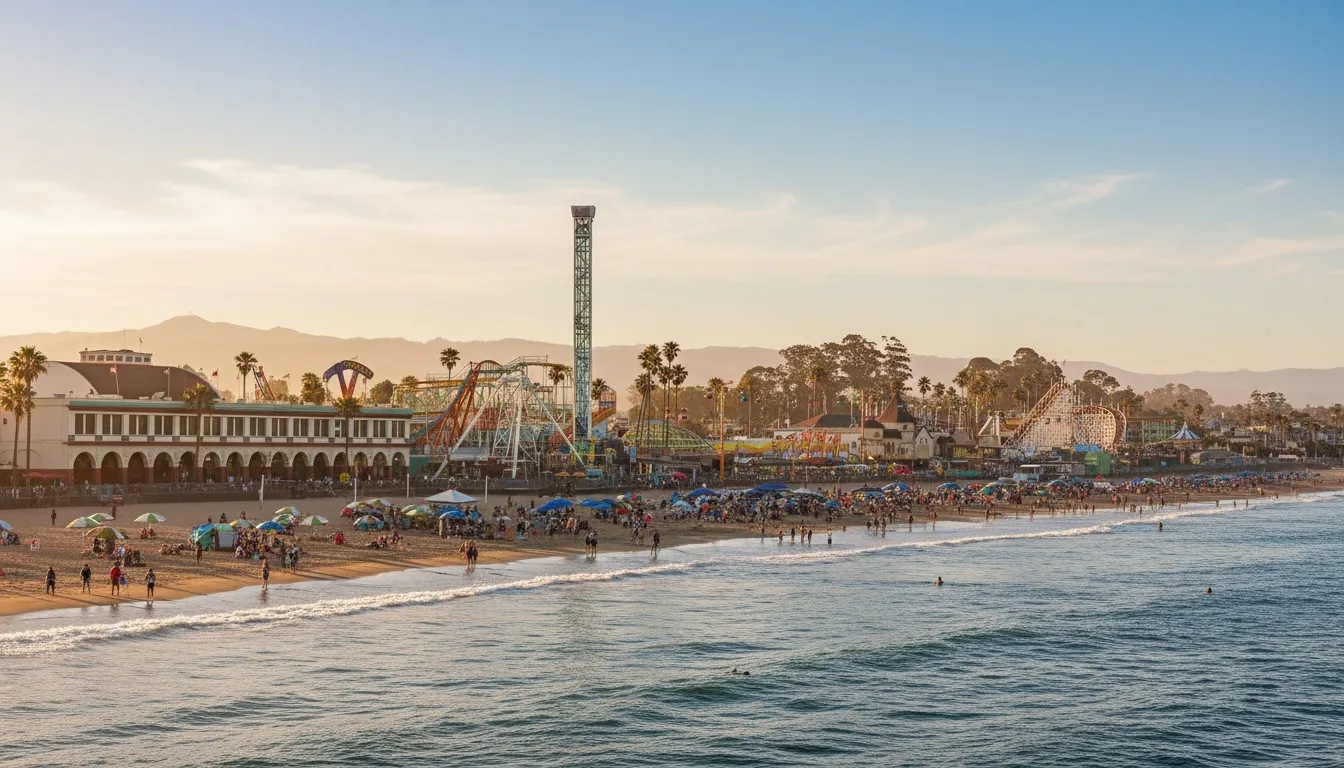
Downtown Santa Cruz is the only neighborhood in the county where you can walk out your front door and be in the middle of something happening. Pacific Avenue is the spine: restaurants, indie bookstores, a vintage movie theater, craft breweries, and enough coffee shops to rotate through without repeating for two weeks. For tech workers who left San Francisco or Oakland and miss the energy of an urban core, downtown is the closest thing Santa Cruz has to that feeling. It is not a city by Bay Area standards, but it has a pulse, and on any given evening the streets are full of people.
The trade-off is that downtown is the farthest major neighborhood from Silicon Valley, and it shows in the commute numbers. If you are fully remote, this is a non-issue. If you drive over the hill three days a week, the extra 10 to 15 minutes compared to Scotts Valley adds up. But for hybrid workers who value walkability, nightlife, cultural access, and the feeling of living in a real town center, downtown delivers something no other Santa Cruz neighborhood can match.
Commute to Silicon Valley
Downtown Santa Cruz sits 40 to 55 minutes from the major tech campuses, making it one of the longer commutes in the county. The route goes north through the city, picks up Highway 17 near the base of the mountains, and crosses into the valley. Apple Park is about 45 minutes in light traffic. Google in Mountain View runs 50 to 55 minutes. Netflix in Los Gatos is more accessible at 40 to 45 minutes. Meta in Menlo Park stretches to 55 to 70 minutes and is the most painful drive of the group.
The challenge is not just distance but the approach to Highway 17. Morning traffic stacks up on Highway 1 and surface streets between downtown and the Highway 17 on-ramp, adding 5 to 15 minutes that Scotts Valley or Soquel commuters avoid entirely. Rain compounds the problem, as Highway 17 slows significantly in wet conditions. The Highway 17 Express bus departs from the Metro Center downtown, which is actually an advantage since you can walk to the stop rather than driving to a park-and-ride. The bus runs to San Jose Diridon station, connecting to Caltrain for Mountain View and Palo Alto offices.
Housing for Tech Budgets
Downtown’s median home price of $1.05 million is the lowest in the core Santa Cruz neighborhoods, and that number reflects the mix of housing types available. You will find Victorians and Craftsman bungalows on side streets off Pacific Avenue, multi-unit properties near the San Lorenzo River, and small condos and townhomes in mixed-use developments. Single-family homes in the $900,000 to $1.2 million range typically offer two to three bedrooms, original character, and a yard measured in square feet rather than acres.
The value proposition for tech workers is clear: entry-level pricing by local standards, paired with walkable urban amenities that no other neighborhood offers. A $1.1 million home downtown puts you within walking distance of restaurants, bars, coffee shops, a movie theater, and the beach. That same million in Cupertino buys a cramped condo with a view of a parking lot. The caveat is condition. Some downtown housing stock is older and requires updates. Buyers with renovation budgets can find genuine opportunities, particularly on the blocks between Pacific Avenue and the river.
Remote Work Setup
Internet connectivity downtown is strong. Xfinity provides cable speeds up to 1.2 Gbps, and AT&T Fiber is available across much of the area, including newer developments and converted commercial spaces. The density of the neighborhood means infrastructure investment has been consistent.
NextSpace on Pacific Avenue is the standout co-working option. It has operated since 2008, making it one of the oldest co-working spaces in California. Hot desks, dedicated desks, and private offices are available, and the community includes freelancers, startup founders, and remote employees at larger companies. The monthly rates are a fraction of San Francisco co-working costs. Beyond NextSpace, downtown has the deepest bench of cafes for laptop work in the county. Verve Coffee on Pacific Avenue, Cat and Cloud on Cedar Street, and the Santa Cruz Coffee Roasting Company all welcome workers who buy a drink and settle in. The UCSC campus, a short drive or bus ride up the hill, adds library and study spaces for those who want quiet.
The honest limitation is space. Downtown homes tend to be smaller, and carving out a dedicated home office in a 1,200-square-foot bungalow requires creativity. Many downtown tech workers solve this by splitting their week between a home office and NextSpace or a cafe. If you need a four-bedroom house with a detached office, look at Aptos or Soquel. If you want to live where the action is and walk to your co-working space, downtown is the clear choice.
Frequently Asked Questions
- Is Downtown Santa Cruz too far from Silicon Valley for a hybrid commute?
- It depends on your tolerance. The drive is 40 to 55 minutes to most campuses on a good day and can push past an hour in rain or heavy traffic. For a two-day-per-week schedule, most people manage fine. For three or more days, the commute wears on you and neighborhoods like Scotts Valley make more sense.
- Are there co-working spaces in Downtown Santa Cruz?
- Yes. NextSpace on Pacific Avenue is the primary co-working option and has been operating since 2008. It offers hot desks, dedicated desks, and private offices. The downtown area also has numerous cafes that serve as informal work spots throughout the week.