Retirement in Scotts Valley
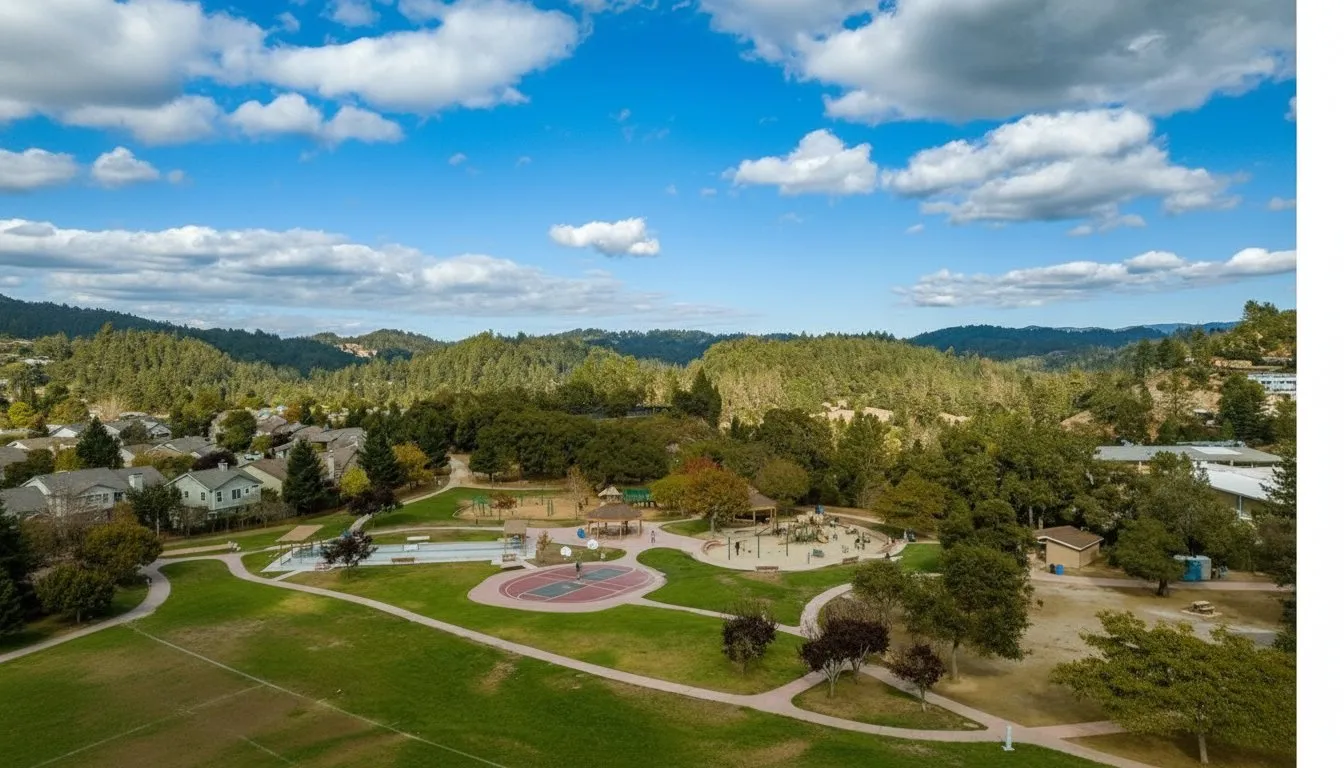
Scotts Valley is the choice for retirees who want peace and quiet above all else. Tucked into the redwood-covered hills between Santa Cruz and the Summit, this small incorporated city feels distinctly separate from the coastal energy of the rest of the county. The streets are wide, the lots are large, and the prevailing sound on most blocks is birdsong and wind through the trees. There is no beach scene, no boardwalk, and no Pacific Avenue equivalent. What Scotts Valley offers instead is a suburban calm that some retirees find far more appealing than coastal tourism.
The community is family-oriented and tight-knit, with a small-town identity that shows up in local events like the Scotts Valley Art, Wine, and Beer Festival and the regular programming at the Scotts Valley Community Center. The climate differs noticeably from the coast: summers are warmer (highs in the 80s are common), winters are cooler, and fog is rare. Retirees who dislike the marine layer that blankets coastal Santa Cruz through June and July will appreciate the inland sunshine. The surrounding redwood forests provide walking and hiking opportunities, and Henry Cowell Redwoods State Park is minutes away for anyone who wants to stay active in a dramatic natural setting.
Healthcare & Services
Scotts Valley’s healthcare access requires some planning. The nearest hospital is Dominican in Santa Cruz, approximately 15 minutes south on Highway 17. There is no hospital in Scotts Valley itself, which is a consideration for retirees with serious medical needs. However, the Scotts Valley Drive corridor has primary care offices, dental practices, and a handful of specialist providers. The Rite Aid pharmacy anchors the commercial strip, and additional pharmacies are available along Mount Hermon Road.
Urgent care is available in Scotts Valley, reducing the need to drive to Santa Cruz for non-emergency situations. The Scotts Valley branch library is a well-used community resource with programming that includes events for older adults. Senior services from Santa Cruz County cover Scotts Valley, including transportation assistance for medical appointments. The Santa Cruz Metro provides bus service between Scotts Valley and downtown Santa Cruz, though headways are less frequent than on coastal routes. For routine medical needs, Scotts Valley Drive handles most requirements, but retirees should expect to drive to Santa Cruz or Capitola for specialist appointments, hospital services, and broader medical care.
Walkability & Getting Around
Scotts Valley is car-dependent by design. The Walk Score typically ranges from 20 to 35, reflecting a suburban layout built around automobile access. Scotts Valley Drive is the main commercial corridor, and while it has sidewalks, the distances between residential neighborhoods and the commercial strip can exceed comfortable walking range for many retirees.
The trade-off is that the streets themselves are quiet, safe, and well maintained. Walking for exercise is pleasant throughout the residential areas, with low traffic volumes and wide shoulders. The Scotts Valley Trail System provides paved paths through portions of the town, and connections to Henry Cowell Redwoods State Park add longer trail options. For daily errands, a car is essential. Santa Cruz Metro bus service exists but is designed more for commuters than for errand running. Retirees who accept car dependence will find Scotts Valley’s low-stress driving environment, ample parking, and uncrowded roads a welcome change from coastal congestion.
Housing Options
Scotts Valley’s median home price of approximately $1.35 million buys more house and more land than comparable prices in coastal neighborhoods. The housing stock skews toward larger single-family homes on generous lots, many built in the 1970s through the 1990s. Single-story homes are available, though two-story construction is more common in Scotts Valley than in the flatter coastal areas.
Condo and townhome options are limited but present, primarily in a few developments near Scotts Valley Drive. These offer lower-maintenance living for retirees who want to avoid the upkeep of a large lot. The larger single-family homes come with significant landscaping responsibilities, including redwood tree management and hillside drainage considerations that coastal neighborhoods do not face. Scotts Valley does not have a dedicated 55-plus community. Retirees drawn to this area typically value privacy, space, and nature over walkability and social density. Those with mobility concerns should focus their search on the flatter portions of town near Scotts Valley Drive and Bean Creek Road, avoiding the steeper hillside properties that require navigating significant grades daily.
Frequently Asked Questions
- Is Scotts Valley too isolated for retirees?
- Scotts Valley is quieter and more suburban than coastal neighborhoods, but it is not isolated. Scotts Valley Drive has grocery stores, restaurants, a library, and medical offices. Downtown Santa Cruz is about 15 minutes south on Highway 17. The trade-off is less walkability and no beach access, but retirees who prefer a quiet, wooded environment find it appealing.
- What are the advantages of retiring in Scotts Valley versus coastal Santa Cruz?
- Scotts Valley offers lower density, more space, a quieter atmosphere, and slightly lower home prices than most coastal neighborhoods. The median sits around $1.35 million. Summer temperatures are warmer than the coast, which appeals to retirees who dislike fog. The town center along Scotts Valley Drive has essential services within a compact corridor.