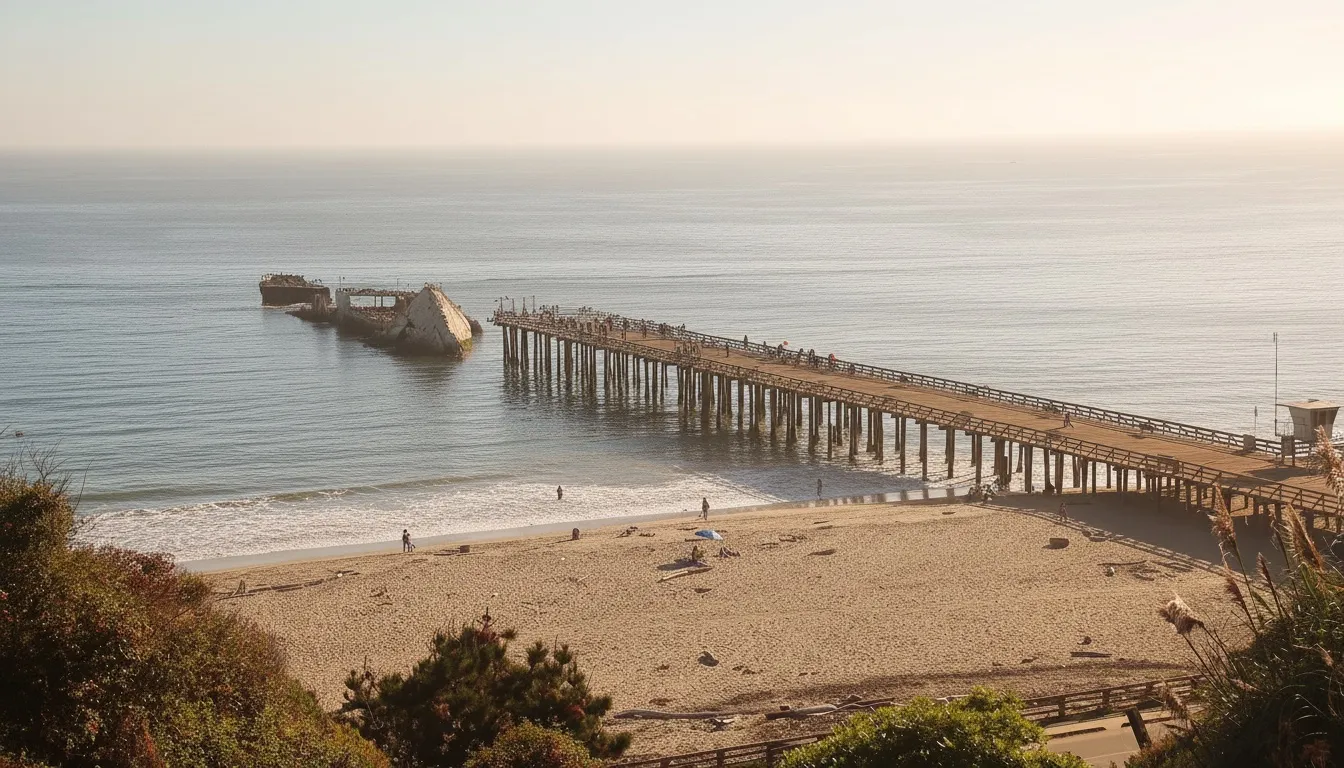
Seacliff is the neighborhood you find after you have already decided on the Aptos area but realize the prices there have climbed past your comfort zone. Sitting just west of Aptos along the coast, Seacliff is a compact residential community built on bluffs above Seacliff State Beach. The Cement Ship, the rusted-out hull of the SS Palo Alto resting at the end of the fishing pier, is the local landmark, and it sets the tone: this is a place with character and history that does not try too hard. The streets are quiet, the lots are generous, and the demographic tilts toward established professionals and retirees who chose calm over convenience.
For tech workers, Seacliff functions as a sleeper pick. It does not have the name recognition of Pleasure Point or the school reputation of Aptos, but it offers a coastal lifestyle, strong commute numbers, and a price point that lands between the premium and budget neighborhoods. The trade-off is that Seacliff has almost no commercial infrastructure of its own. You drive to Aptos Village or the 41st Avenue corridor for groceries, coffee, and restaurants. If you work from home most days and value quiet above all else, that trade-off disappears.
Commute to Silicon Valley
Seacliff’s commute profile mirrors Aptos closely, which makes sense given their geographic proximity. The drive to Silicon Valley runs 30 to 40 minutes under normal conditions. You head north on Highway 1, merge onto Highway 17, and cross the mountains. Apple Park in Cupertino takes about 35 minutes on a clear morning. Google in Mountain View runs 40 to 45 minutes. Netflix in Los Gatos is 30 to 35 minutes. Meta in Menlo Park stretches to 50 to 55 minutes.
The Highway 1 on-ramp near State Park Drive is accessible within minutes from most Seacliff homes, and traffic along this stretch of the coast is lighter than the Santa Cruz city sections to the north. You avoid the downtown congestion that adds time for Westside and Downtown commuters. The Highway 17 variables apply here as they do everywhere: rain slows everything down, early mornings move faster than 8 AM departures, and the occasional rockslide or fender-bender can turn a 35-minute drive into an unpredictable crawl. Seacliff residents who commute two days per week tend to absorb these disruptions easily. Daily commuters may find the lack of a transit alternative frustrating, since the Highway 17 Express bus stop at Cavallaro requires a 10-minute drive to reach.
Housing for Tech Budgets
Seacliff’s median home price of $1.45 million places it in the upper-middle range for Santa Cruz County. You pay more than Capitola ($1.35M), Soquel ($1.25M), and Downtown ($1.05M), but considerably less than Aptos ($1.85M) and Westside ($1.65M). The value proposition is straightforward: coastal living on bluff-top lots at a price that would buy a dated condo in Palo Alto.
The housing stock in Seacliff is a mix of 1960s and 1970s single-family homes, many of which have been remodeled, and newer construction on the lots that turn over. A $1.3 to $1.6 million budget typically gets you a three-bedroom, 1,500- to 2,000-square-foot home with a usable yard and, on the right streets, partial or full ocean views. Homes on the bluff side of the neighborhood command the highest prices, while those a few blocks inland drop into the $1.2 to $1.4 million range. For a tech worker coming from the Bay Area, the mental math is simple: ocean-view homes in Seacliff cost less than no-view homes in most Peninsula cities.
Remote Work Setup
Internet service in Seacliff is solid but worth verifying at the address level. Xfinity provides cable speeds up to 1.2 Gbps throughout the main residential streets. AT&T service is available but Fiber penetration is inconsistent, with some blocks limited to slower DSL connections. Given the neighborhood’s small size and lower density, infrastructure upgrades tend to arrive later than in more populated areas.
Seacliff has no cafes, co-working spaces, or commercial establishments that double as work spots. This is a purely residential neighborhood. Remote workers here work from home, full stop. The good news is that the homes support it well. Lots are large enough for detached office structures. Many homes have spare bedrooms, sunrooms, or enclosed patios that convert into workspaces with minimal effort. The quiet is a genuine asset: no foot traffic, no street noise, no distractions beyond the occasional sound of waves. If your remote work style requires going somewhere to feel productive, Seacliff will feel isolating. If you are the type who builds a great home office and does your best work in silence, this neighborhood is a sanctuary.
For variety, Aptos Village is a five-minute drive south with coffee shops and casual restaurants. The 41st Avenue corridor is about the same distance north. NextSpace downtown is 15 to 20 minutes away. The rhythm for many Seacliff remote workers involves heads-down mornings at home, a midday walk on the beach or along the pier, and a coffee shop session in Aptos Village for the afternoon block. It is not the most social remote work setup, but for focused deep work, few neighborhoods in the county compete.
Frequently Asked Questions
- How does Seacliff compare to nearby Aptos for tech workers?
- Seacliff is slightly more affordable than Aptos ($1.45M vs $1.85M median) while sharing a similar quiet coastal character and comparable commute times. Seacliff has fewer commercial amenities and a smaller footprint, making it even quieter. Tech workers who want the Aptos vibe without the Aptos price tag often end up here.
- What is Seacliff State Beach like?
- Seacliff State Beach is a wide, sandy beach with a fishing pier built on the remains of the SS Palo Alto, a World War I-era concrete ship. It is one of the most unique beach landmarks in California. The beach is excellent for walking, fishing, and sunset watching, and it rarely has the crowds of the more central Santa Cruz beaches.