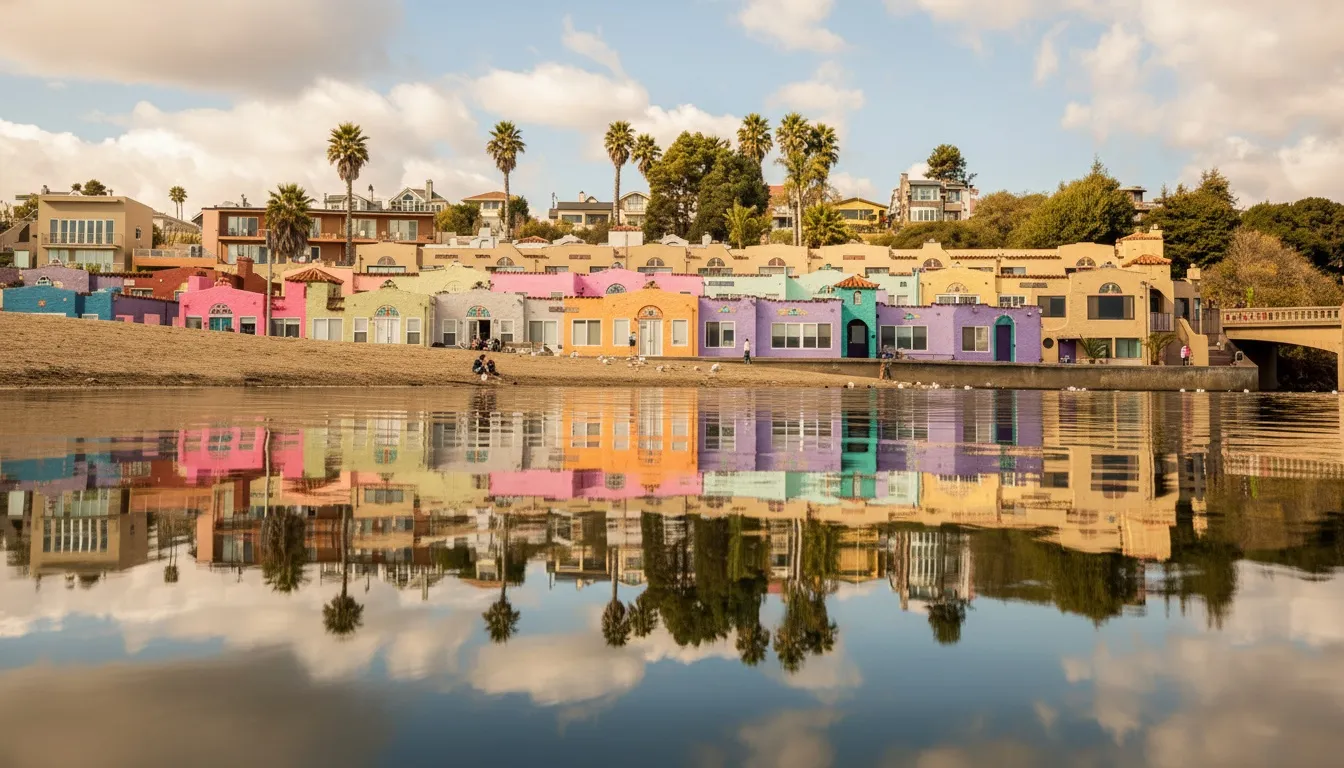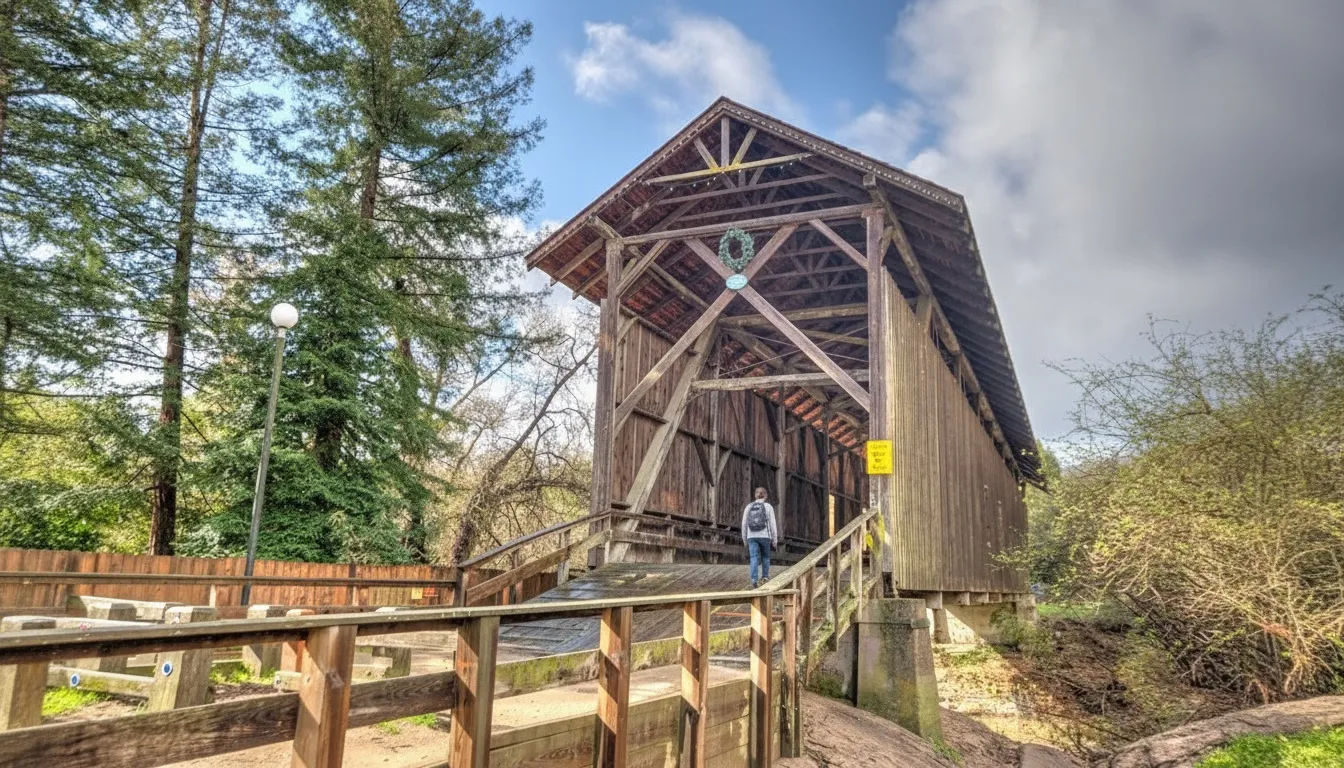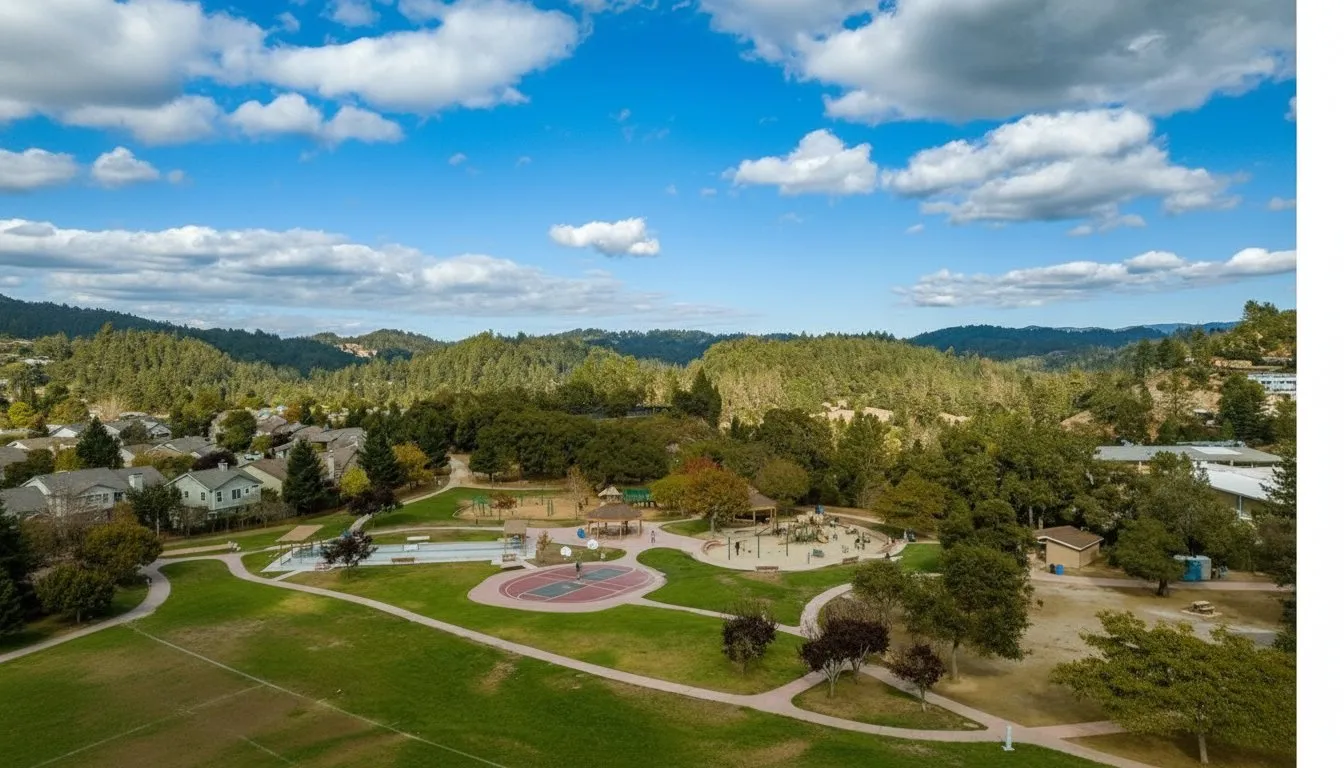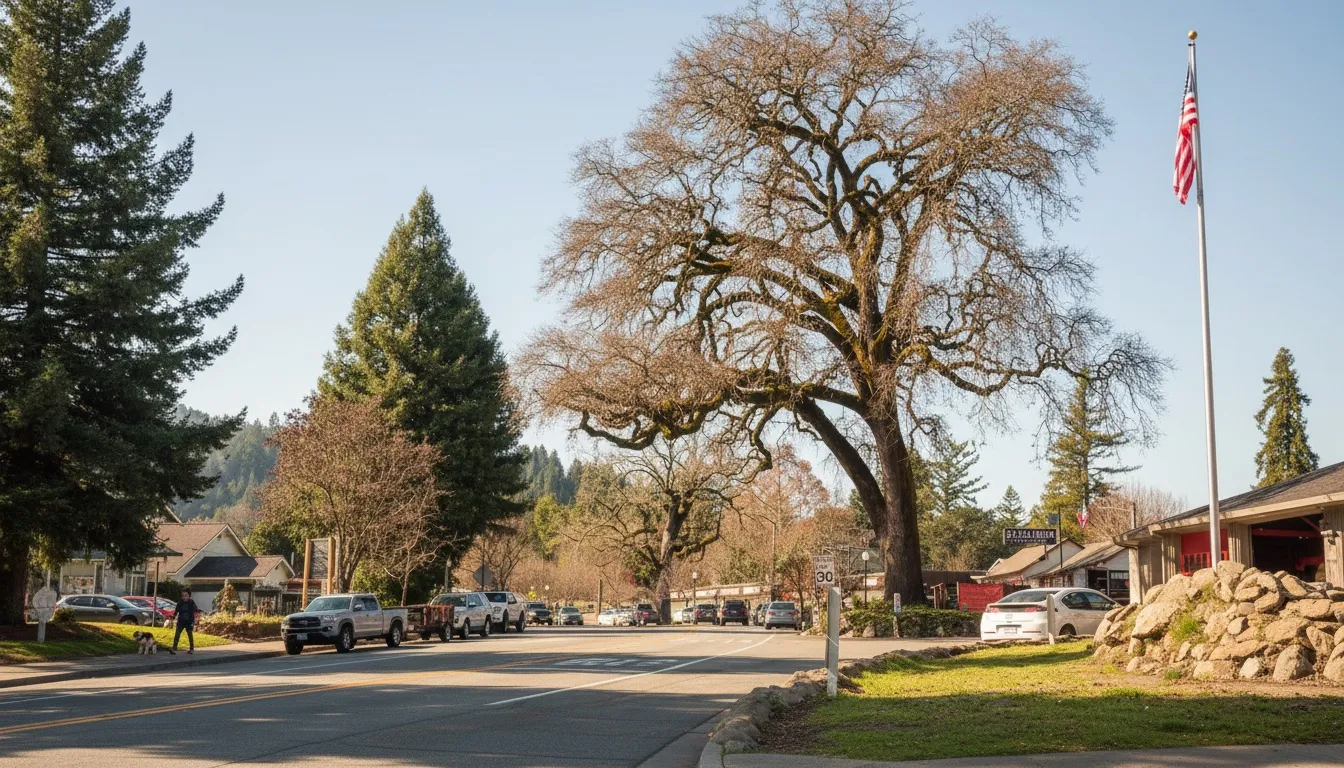
Berkeley and Santa Cruz are kindred spirits, both progressive university towns with farmers markets as social anchors and a collective preference for being a little weird. The move south is less culture shock than trading the Bay for the Pacific as the center of your daily geography, and trading East Bay urbanism for redwoods and a surf ethic.
Kindred Spirit Cities
If you live in Berkeley and you have spent any time in Santa Cruz, you probably noticed something familiar. The independent bookstores. The co-op grocery. The person playing guitar on the sidewalk at 10 AM on a Wednesday. The bumper stickers that double as political manifestos. The general, collective agreement that being a little weird is not just acceptable but preferred.
Berkeley and Santa Cruz are kindred spirits in the California landscape. Both are university towns with deep progressive roots. Both fiercely protect their local businesses against chain encroachment. Both have farmers markets that function as social anchors. Both attract people who care more about ideas and quality of life than status and polish. The difference is that Berkeley wraps that identity around academic culture and East Bay urbanism, while Santa Cruz wraps it around the ocean, the redwoods, and a surf ethic that shapes the rhythm of daily life.
That kinship is why Berkeley residents tend to adapt to Santa Cruz faster than transplants from almost anywhere else. You already speak the language. The move is less about culture shock and more about trading one flavor of Northern California independence for another.
Housing: Comparable Prices, Different Inventory
The cost comparison between Berkeley and Santa Cruz surprises people who expect a dramatic gap. Berkeley’s median home price sits around $1.4 million. In Santa Cruz County, the range runs from roughly $1.05 million in Live Oak and Eastside Santa Cruz up to $1.65 million in Aptos and $1.85 million in Seacliff. For most neighborhoods, you are looking at comparable pricing, not a significant discount.
What changes is what you get. In Berkeley, $1.4 million buys a Craftsman bungalow on a narrow lot, possibly with a tenant in a converted garage unit, street parking, and neighbors close enough to hear through the walls. In Santa Cruz at the same price point, you are looking at a three- or four-bedroom home on the Westside with a real yard, a garage, and enough space between you and the next house to breathe. You will not save a fortune on the purchase price, but you will get meaningfully more house.
Rental prices tell a similar story. Berkeley two-bedrooms run $2,800 to $3,500 per month. Santa Cruz equivalents fall between $2,600 and $3,400 depending on proximity to the coast. The gap narrows further in desirable neighborhoods on both sides.
Where the savings emerge is in the daily cost of living. Dining out runs 15 to 20 percent cheaper in Santa Cruz. Entertainment spending drops naturally because so much of what you do here, surfing, hiking, beach bonfires, costs nothing. Groceries are roughly equivalent, especially if you are already shopping at co-ops and farmers markets in Berkeley.
Best Neighborhoods for Berkeley Transplants
Each Santa Cruz neighborhood has a distinct personality, and certain ones map naturally to what Berkeley residents already know and love.
Downtown Santa Cruz Schools: solid. Downtown Santa Cruz is the closest analog to the Telegraph Avenue and Shattuck corridor energy you know from Berkeley. Pacific Avenue is the spine, independent shops, bookstores, cafes, a thriving Wednesday farmers market, and enough foot traffic to make it feel alive without feeling crowded. The housing stock includes Victorians, Craftsman cottages, and modern condos, and at $1.15 million median, it is the most accessible coastal option in the county. If walkability and cultural density matter most to you, start here.
Westside Santa Cruz Schools: strong. The Westside is where North Berkeley families tend to land. The feel is residential, leafy, and quietly beautiful, with morning walks along West Cliff Drive replacing your Marin Avenue hill climb. Westlake Elementary carries an strong ratings. Homes range from mid-century originals to tasteful renovations, and the neighborhood puts you within biking distance of both downtown and Natural Bridges State Beach. The farmers market regulars, the yoga studios, and the coffee shop culture will all feel immediately familiar.
Pleasure Point Schools: solid. If the countercultural thread in Berkeley is what resonates most with you, the DIY ethos, the community that values authenticity over appearances, Pleasure Point is your neighborhood. This tight-knit surf community along East Cliff Drive has its own gravitational pull. The vibe is unpretentious, the local spots are fiercely loved, and the ocean is the organizing principle of daily life. Homes here are a mix of beach bungalows and renovated properties, and they move fast, averaging just 18 days on market. This is Berkeley’s South Side meets the Pacific.
Lifestyle: What Changes, What Stays the Same
The cultural continuity between Berkeley and Santa Cruz is real, but the daily texture shifts in ways that accumulate quickly.
You trade Telegraph for Pacific. The energy is similar, local, independent, a little scrappy, but Pacific Avenue has more breathing room. You trade Tilden Park for Wilder Ranch State Park, swapping eucalyptus-lined East Bay hills for coastal bluffs with ocean views. You trade Bay sunsets seen from the Berkeley Marina for Pacific sunsets watched from West Cliff Drive or Seabright Beach. In each case, you are not losing something. You are exchanging one version of beauty for another.
The outdoor life deepens. In Berkeley, nature is accessible but requires intention. You drive to Tilden, to Point Reyes, to Muir Woods. In Santa Cruz, nature is the default. The redwoods at Henry Cowell are ten minutes away. The surf at Steamer Lane is visible from the street. You do not plan outdoor time. It just happens, woven into the ordinary rhythm of the week.
Community is where Berkeley transplants often feel the strongest recognition. Santa Cruz is a place where people care about local politics, show up to city council meetings, argue about bike lanes, and volunteer at the food bank. The scale is smaller than Berkeley, about 65,000 residents compared to 125,000, which means your participation matters more and your face becomes known faster. The Wednesday farmers market downtown fills the same social role as the Saturday market in North Berkeley, but you will start recognizing people by your third visit.
What you lose is proximity to the East Bay and San Francisco. BART is gone. The breadth of Berkeley’s restaurant scene narrows. The density of cultural programming, Cal Performances, BAMPFA, the Pacific Film Archive, does not have a direct equivalent in Santa Cruz, though the Rio Theatre, UCSC arts programming, and the local music scene offer more than you might expect.
The honest tradeoff is this: Berkeley gives you a progressive university city with deep cultural infrastructure and East Bay connectivity. Santa Cruz gives you a progressive beach town with deeper nature access and a slower pace. For Berkeley residents who have been eyeing the coast, the question is not whether Santa Cruz will feel like home. It will. The question is whether you are ready to let the ocean replace the Bay as the center of your daily geography.