You know the exact moment it starts. Late October, the clocks fall back, and suddenly it is dark at 4:30 PM. The wind off the harbor finds every gap in your jacket. By December, the sidewalks are a mess of black ice and frozen slush, and you are layering long underwear under your work clothes like it is a survival skill. By February, you have forgotten what the sun feels like on your face. Every Bostonian has a breaking point. The third nor'easter. The morning your car will not start because it is negative eight. The realization that you have spent four hundred dollars on heating in a single month. If you have started looking at Santa Cruz, you already know yours.
Why Bostonians Are Heading to the California Coast
Boston is a remarkable city. The history, the universities, the intensity of its people, the way the whole metro vibrates during playoff season. But Boston also demands a toll, and that toll is physical. Winters that stretch from November through March with temperatures regularly dropping below zero. Heating bills that rival a car payment. The annual ritual of digging your car out of a snowbank and placing a lawn chair in the spot like some frozen territorial claim. After enough years, the charm of a four-season city starts to feel like a euphemism for six months of endurance.
Remote work broke the equation that kept people tethered. When the office was in Kendall Square or the Seaport, the winter was the price of the career. Now that the office is a laptop, the math changes entirely. A growing number of Boston tech workers, particularly those at companies like HubSpot, Wayfair, Toast, and DraftKings, have discovered that their jobs travel just fine to a place where the temperature never drops below 40 degrees and the ocean is not something you avoid from October to June.
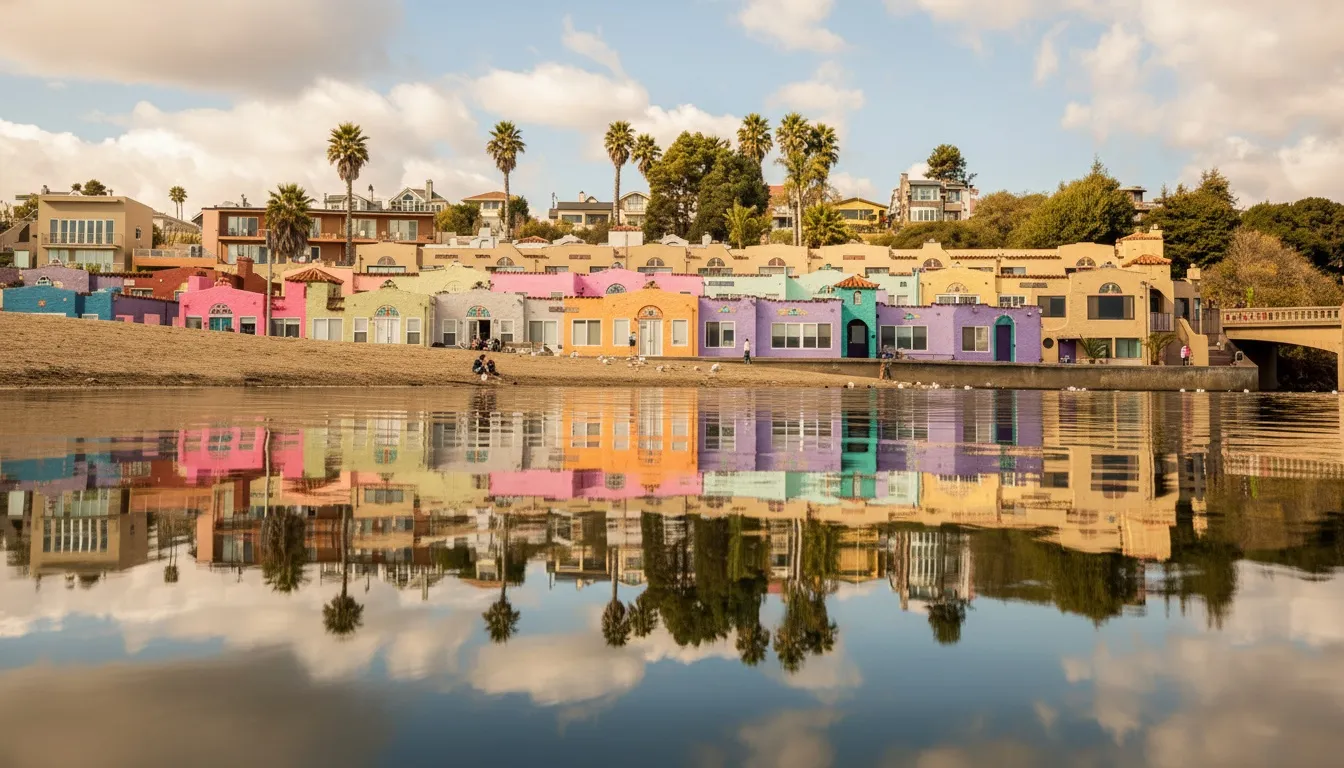
Santa Cruz is not just an escape from winter. It is an active choice toward a different daily life. The town sits on the northern curve of Monterey Bay, surrounded by redwood forests, with Silicon Valley 35 to 50 minutes over the mountains on Highway 17. It has the cultural sharpness of a university town, the outdoor access of a coastal village, and the professional proximity of a Bay Area suburb. For someone leaving Boston, it solves the weather problem without creating a boredom problem.
Cost of Living: More Expensive, But Different Expensive
Boston’s median home price sits around $800,000, though anything in Cambridge, Brookline, or the desirable parts of Somerville pushes well past a million. Santa Cruz County ranges from $1.15 million downtown to $1.85 million in premium coastal neighborhoods. On paper, Santa Cruz is more expensive. In practice, the gap is narrower than the numbers suggest.
Boston’s hidden costs are brutal. Heating a drafty triple-decker through a Massachusetts winter runs $300 to $500 per month. Parking in the city can cost $200 to $400 monthly, if you can find a spot at all. Salt and sand destroy your car’s undercarriage, accelerating maintenance and shortening its life. Winter clothing, snow tires, ice scrapers, roof rakes, emergency kits: the seasonal overhead adds up in ways that rarely make it into cost-of-living calculators.
In Santa Cruz, heating costs are typically lower than Boston winters. You will not need snow tires, and rust-related wear is usually less intense. A light jacket often handles the coldest nights of the year. The financial trade-off is real, but it is not as lopsided as median home prices suggest.
Rent follows a similar pattern. A two-bedroom in Boston runs $2,800 to $3,500 depending on neighborhood. In Santa Cruz, expect $2,600 to $3,400. The rental market is surprisingly comparable, and you get ocean proximity instead of highway proximity.
The lifestyle savings are where the equation tilts. Boston’s long winters push spending toward indoor entertainment, restaurants, bars, concerts, and gym memberships to compensate for months when the outdoors is hostile. In Santa Cruz, your weekends fill with surfing, coastal trail runs, beach bonfires, and farmers market mornings. The best parts of daily life cost nothing.
Climate: There Is No Comparison
Boston averages about 200 sunny days per year. Santa Cruz gets 260 or more. Boston’s winter temperatures regularly hit single digits and below zero, with wind chills that make exposed skin dangerous. Santa Cruz’s coldest nights rarely dip below the mid-40s.
Boston gets roughly 48 inches of snow annually. Santa Cruz gets none. Zero. The concept of a snow day does not exist here. Neither does black ice, frozen pipes, or the particular misery of standing on a Green Line platform in January while the wind tunnels down Comm Ave.
Santa Cruz summers are warm and dry, typically in the low to mid-70s. No humidity. No mosquitoes. No August heat waves that turn your apartment into a sauna because you never bothered with AC. Coastal fog rolls in some mornings and burns off by midday, keeping temperatures mild even when inland California bakes.
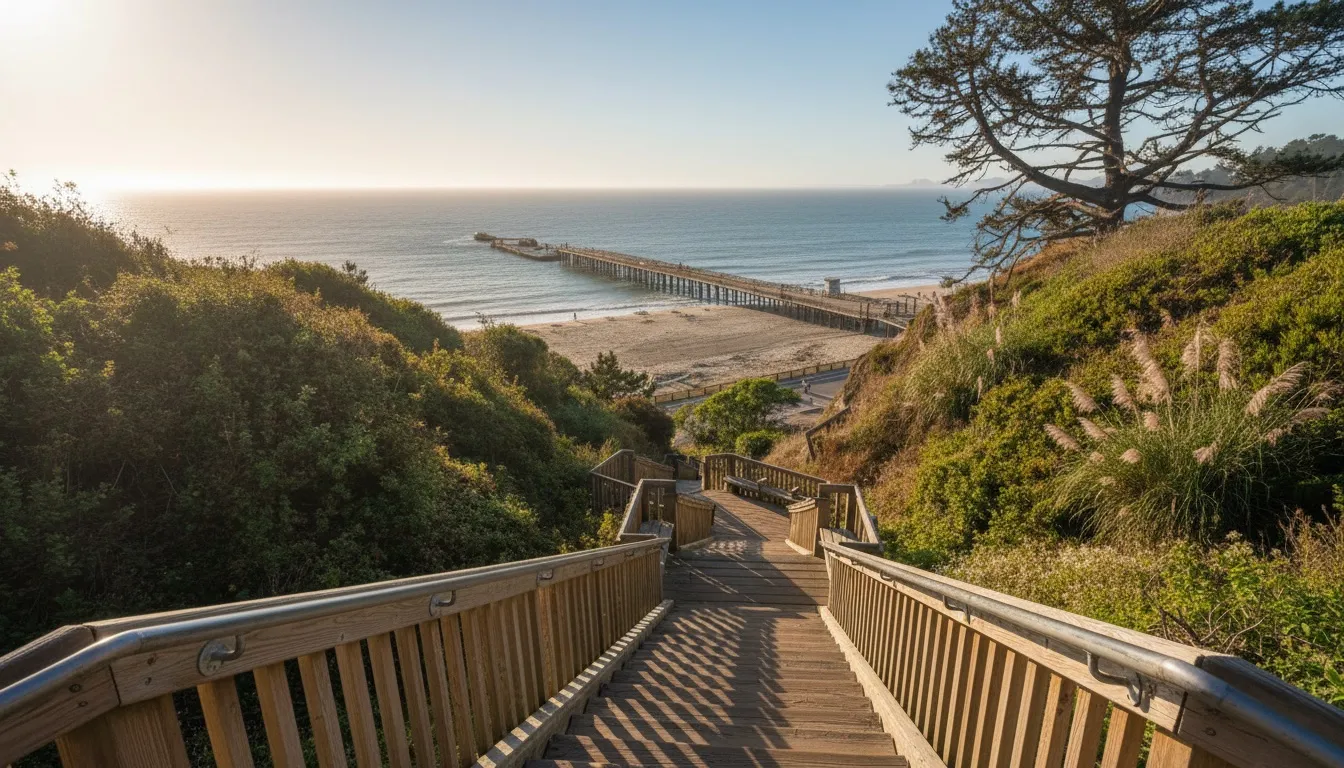
The adjustment Bostonians mention most is the Pacific Ocean temperature. It runs between 50 and 58 degrees, colder than anything you would voluntarily enter at Carson Beach or Walden Pond in August. A wetsuit is standard gear for surfers and regular swimmers. But here is the thing: you can go to the beach in January. You can watch the sunset over the Pacific on a Tuesday in February wearing a light sweater. That never gets old, especially for someone who spent the last decade scraping ice off a windshield at 6 AM.
Best Neighborhoods for Boston Transplants
Downtown Santa Cruz For the Cambridge and Somerville Crowd. Schools: solid. If you loved the walkability of Harvard Square, the indie shops on Mass Ave, and the energy of a dense urban neighborhood with character, downtown Santa Cruz is your landing spot. Pacific Avenue is the spine, lined with independent bookstores, coffee shops, restaurants, and a weekly farmers market that puts anything at Haymarket to shame. The housing stock runs from renovated Victorians to modern condos, and at $1.15 million median, it is the most accessible entry point in the county. Best for professionals and couples who want to ditch the car for daily errands and walk to dinner.
Westside Santa Cruz For Families from Newton and Brookline. 42 min to Apple. Newton and Brookline families move for the schools, the safety, and the tree-lined streets. The Westside offers the same priorities with an ocean upgrade. West Cliff Drive provides a three-mile coastal path for morning runs and bike rides. Natural Bridges State Beach is walking distance. The neighborhood has strong schools, a progressive community identity, and the kind of residential calm that Newton families value. The difference is that your after-dinner walk ends at a bluff overlooking the Pacific instead of a cul-de-sac.
Scotts Valley For Suburban Families from the MetroWest. If you are coming from Wellesley, Needham, or Lexington with school-age kids, Scotts Valley is the closest analog. Top-rated schools with top-rated ratings, residential streets, parks, and a family-oriented community nestled in the redwoods along Highway 17. It offers the shortest commute to Silicon Valley and the kind of quiet suburban pace that MetroWest families know well. You trade the beach being steps away for the beach being a fifteen-minute drive, which for families prioritizing schools and space, is an easy trade. The redwood setting also means your backyard might genuinely border a forest, which is a different kind of beautiful than the Middlesex Fells.
Lifestyle: Trading the Harbor for the Bay
The cultural adjustment from Boston to Santa Cruz is less jarring than you might expect. Both are opinionated, educated communities with strong local identities. Boston has its universities and fierce neighborhood loyalty. Santa Cruz has UC Santa Cruz and a counterculture streak that has not faded since the 1960s. Both places value substance over flash.
What changes is the pace and the orientation of daily life. In Boston, life organizes around seasons and schedules. In Santa Cruz, life organizes around the outdoors. The Charles River Esplanade becomes West Cliff Drive. Saturday mornings at the Somerville farmers market become Wednesdays on Pacific Avenue. The T becomes a bike. The Red Sox become beach sunsets, which, it turns out, have a better win percentage.
Food shifts from clam chowder and lobster rolls to fish tacos, poke bowls, and produce so fresh it will ruin you for East Coast grocery stores permanently. The Santa Cruz farmers market is not a novelty. It is where people do their actual shopping. You will still find excellent seafood, just prepared with a California accent instead of a New England one.
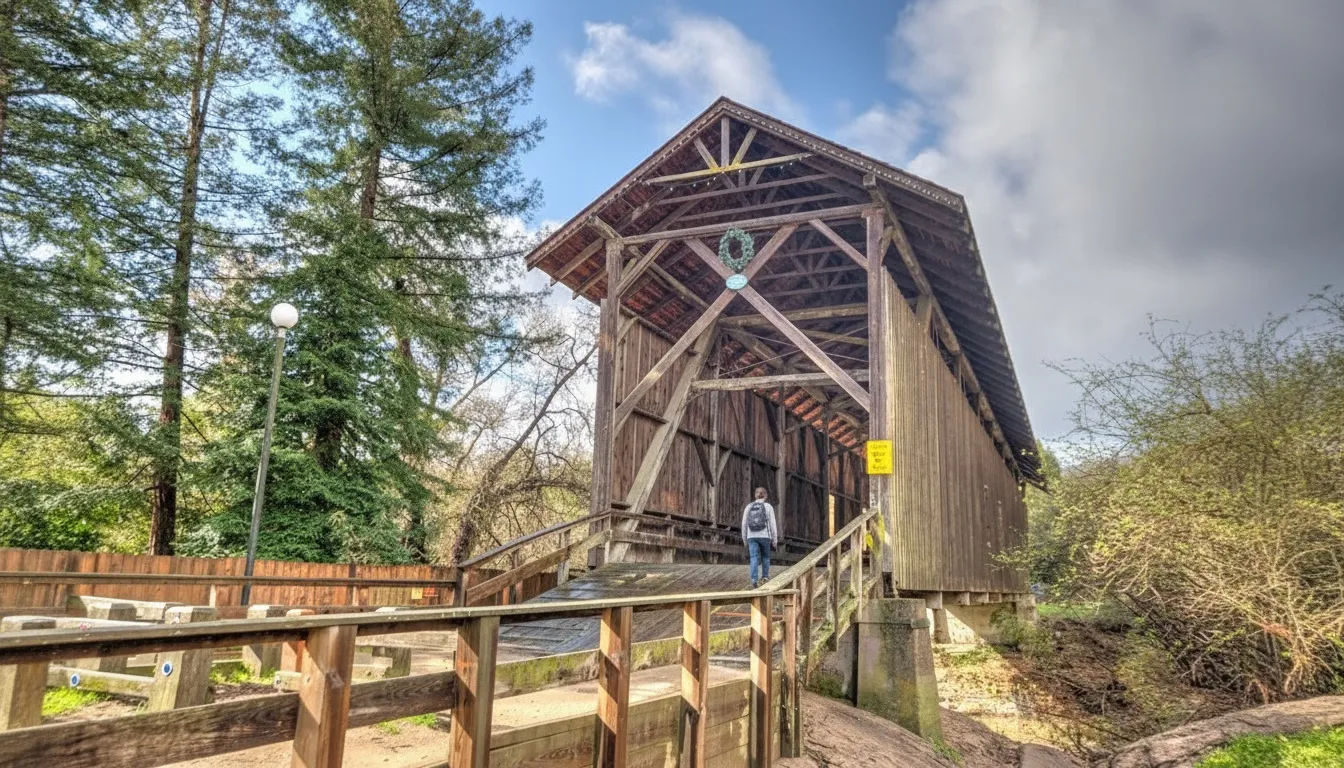
The outdoors expand from something you do on weekends between May and October to something you do every day, year-round. Instead of the Blue Hills Reservation, you get the Forest of Nisene Marks and Henry Cowell Redwoods. Instead of Cape Cod weekends, you drive twenty minutes to a beach that is not charging for parking or packed with tourists.
Making the Move
Visit first, and not during summer when every place looks good. Come in January. Walk the coastal trail in a light jacket while your group chat back home complains about a nor’easter. That contrast will tell you everything you need to know.
Get pre-approved for a mortgage before you start looking. Santa Cruz homes move fast, averaging 18 to 28 days on market. The Boston market taught you to move quickly, but inventory here is tighter and competition is real. Being pre-approved means you can act when the right house appears.
If you are not ready to buy, rent for six to twelve months. Learn the neighborhoods. Figure out whether you are a downtown person, a Westside person, or a Scotts Valley person. That distinction matters more than you think, and it is hard to judge from three thousand miles away.
The move from Boston to Santa Cruz is a trade. You trade a world-class city with punishing winters for a coastal town with perfect weather. You trade the T for a bike. You trade Fenway for the ocean. You trade shoveling snow for watching surfers from your morning coffee spot. For the people who make this choice, February alone makes the answer obvious.